Quick Summary
Protect smart appliances from power surges by layering defenses: install a whole-home surge protector at your main electrical panel, then add point-of-use protection at each appliance. Protect modem, router, and Ethernet lines too, because surges can travel through network cables. Watch for flickering lights, Wi-Fi dropouts, and unexplained resets after storms.
Get a Quote
Last Updated: November 27, 2026
Smart appliances are full of tiny circuit boards, sensors, and Wi-Fi chips. Those parts are far more sensitive than the old mechanical controls in a basic toaster or washer. A power surge that a traditional appliance shrugs off can fry a smart fridge's control board or knock out a smart thermostat in seconds.
A short voltage spike from a storm or a nearby utility switch can cause damage that nobody notices until the appliance stops working. The fix is layered protection, not a single cheap power strip.
Smart appliances are also harder to diagnose after a surge. The machine may still turn on, but its app stops connecting, its sensors read wrong, or its settings reset. These problems look like software issues, so homeowners often waste time troubleshooting the wrong thing.
Here is why smart devices are at higher risk:
A surge does not always announce itself. Some of the clearest signs show up in the devices you use every day. Watch for these warning signs after a storm or an outage:
AEPowerHouseTV
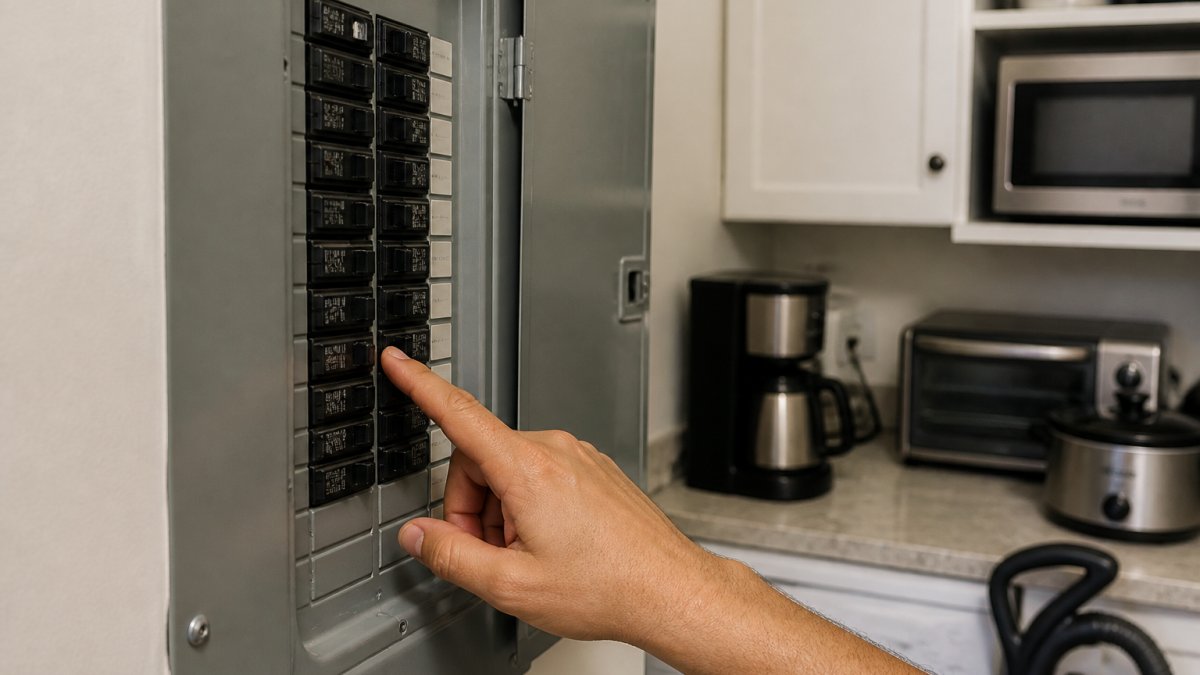
If you notice any burning smell, scorch marks, or a hot outlet, turn off the power at the breaker and call a licensed electrician right away. Do not keep using the device.
A single surge may cause no visible damage at all. Still, one bad surge can weaken components, so an appliance that seems fine may fail months later. Check your devices after every major storm.
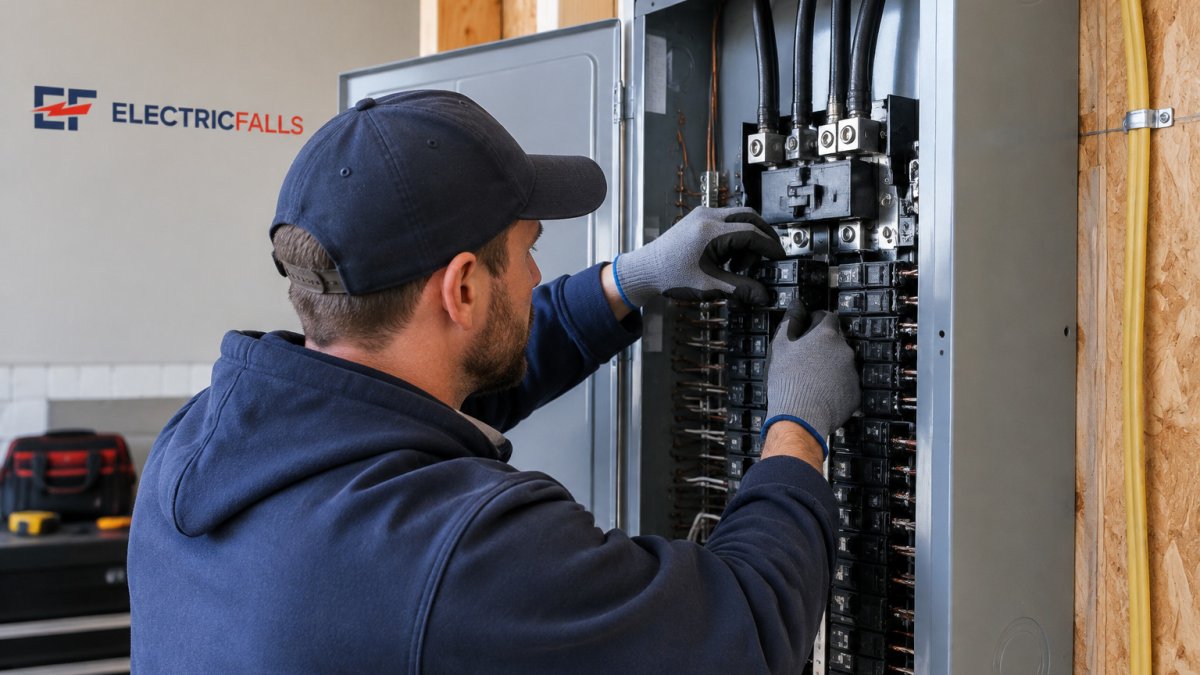
A whole-home surge protector is the first line of defense. It is mounted at or near your main electrical panel, and it diverts surge energy before it can reach the wiring in your house. Think of it as the front door guard for your entire system.
Installation is work for a licensed electrician. The device connects to your panel and must be sized and wired correctly, with grounding checked as part of the job.
Here is a simple process to follow:
A whole-home unit does not replace point-of-use protection. It stops large surges at the entrance, but smaller surges can still get through. That is why the next step matters.
Plug-in protection at the appliance catches what the whole-home device lets through. But not every strip labeled "surge protector" is worth plugging a connected refrigerator or washer into. The difference comes down to a few ratings printed on the package, and most shoppers never read them.

Here is how to compare devices instead of guessing:
For smart appliances specifically, match the protector to the load. A refrigerator or washer draws far more current than a streaming box, so a strip rated for small electronics may not be appropriate. Check the appliance's nameplate amperage and choose a protector rated above it. For appliances with a dedicated circuit, a point-of-use device installed at the outlet by an electrician is often a better fit than a strip on the floor.
Watch out: daisy-chaining a surge protector into another power strip, or plugging a high-draw appliance into a strip rated for office equipment, can overheat the strip and defeat the protection entirely.
Here is a quick checklist for appliance-level protection:
Surges travel through more than the power cord. Your router, modem, and Ethernet cables can carry a surge straight into your smart home hub and connected devices. Protect these connections too.
Protecting only the power side leaves a gap, so cover both the power and data paths.
A generator can keep your home powered during an outage, but it can also create surge risks. When power returns or the generator cycles on and off, voltage can spike. Smart appliances are especially sensitive to this.
If you use a whole-home or standby generator, make sure the transfer switch and generator connection are installed by a licensed professional. Keep your whole-home surge protector in place, and continue using protected strips for sensitive electronics.
Surge protection is not a one-time job, and it is not a force field. Knowing what a protector can and cannot do helps you set realistic expectations and decide when to call an electrician.
What surge protectors are not designed to handle:
Use this checklist to keep your system working:
Surge protectors wear out over time, even without a visible surge event. Metal-oxide varistors, the components that do most of the absorbing, degrade with each event. Check the manufacturer's guidance for replacement timing, and replace any device whose status indicator has failed.
Watch out: a protector that has absorbed a major surge may still pass power to the appliance while offering no protection at all. If the status light is out, treat the device as spent.
If you want a whole-home surge protector or help protecting your smart appliances, the next step is a professional assessment. A licensed electrician can review your panel, confirm grounding, and recommend the right mix of whole-home and point-of-use protection for your home.
Electric Falls serves Southeast Idaho, including Idaho Falls, Rexburg, Rigby, and Ammon. Our professionals are licensed and insured, and we are committed to the latest electrical codes. Contact us to set up a visit and get your smart appliances protected before the next storm season.
Surge protectors work by diverting excess voltage away from connected equipment, and they help protect smart appliances that contain control boards and network modules. Look for a protector with a UL 1449 listing and a joule rating suited to the device. A protector cannot stop every surge, though. Very large surges from nearby lightning can exceed what a plug-in device absorbs, which is why pairing a whole-home surge protector with point-of-use protection gives better coverage for expensive electronics.
A whole-home surge protector is installed at the main service panel and reduces surges before they travel through the house wiring to your appliances. It protects large appliances, HVAC equipment, and circuits that plug-in devices cannot reach. Many homeowners still add point-of-use protection for sensitive smart devices, because the whole-home unit is designed to handle the bulk of a surge rather than the fine-tuned clamping that electronics need. Together the two layers offer stronger protection.
Common signs include lights that flicker or dim briefly, appliances that suddenly reset or stop working, a burning smell from an outlet, and a smart device that loses its network connection or displays error codes after a storm. Repeated resets or failures after a utility outage can also indicate damage. If you notice any of these, have a qualified electrician inspect your panel and surge protection, and check smart appliances for lingering problems.
Yes. Generators produce power that can fluctuate as the engine speed changes, and switching between utility and generator power can create surges inside your home. A surge protector on the generator-supplied circuits, or a properly coordinated whole-home device, helps shield smart appliances from these variations. Have a licensed electrician confirm that the generator transfer equipment and protection are installed correctly for your home's electrical system.

What an excellent experience! I highly recommend this company! from first contact, through quoting, modifications to scope, ordering materials, installation and follow through, there was not a single minute that I didn't know exactly what was going on. The communication, product and service were all impeccable. A+

Gerry T.


Dustin came over to our house and helped us hook up a hot tub. His quote was well below others that we had come over and he was super easy to work with. I would recommend electric falls to anyone who needs a great electrician at an affordable cost!

Hailey W.
These guys are awesome. More than fair pricing, punctual and professional! Highly recommend!

Jim C.
Quick response and fixed the problem efficiently. Would use him again with any needs.

Christine P.
We had a great experience with Electric Falls. We had a need to replace an old fuse box with a breaker box. Dustin was quick to respond, was reasonable in his quote, and did exceptional work. We were pleased with his coordination with us and with Idaho Falls Power. He performed the work when he said he would do it and completed the work within the timeframe that was estimated. Overall, we are extremely satisfied with Electric Falls and will be calling on them again for future needs.

Paul M.
I can not say enough good things about these guys. They got to me so quickly, were incredibly nice, and handled my problem right away. 10/10 would recommend

Whitney P.
Dustin is everything you wish for in every small business owner! He went above and beyond right out of the gate by coming by to do my quote in the evening when he was leaving for a long weekend the next morning. He explained everything about the quote. Price was fair for work being done. He and Cameron showed up as promised and did quick, quality work. Highly recommend!

Robert N.
Dustin was professional from bid thru install of our emergency home generator. In the future I'm going to call for a bid to do the electrical install in our unfinished basement. I'm thinking I don't want you to know about him because he will become too busy to help me. But, go ahead and do with this review as you will but I'm keeping his name at the top of my contacts list. :-)

Korky F.
We had Dustin from Electric Falls come out and install the wiring for a hot tub as well as install a whole home surge protector. Dustin was awesome. He was super informative and got us all set up right away. We are so thrilled that we found a great and reliable electrician. His workers were awesome as well. They were very helpful.

Todd R.
Wonderful customer service and very professional yet personable technicians.
Said what they would do and for how much and they did it
Thank you for all your work

Earl L.
Quick and Efficient! Was able to find the problem and get it all taken care of within the same day so we had our power and utilities working properly again.

Abigail J.
We had Electric Falls run some electricity to our newly built shed. It required trenching the yard to bury some of the lines. They did an awesome job! They were right on time and cleaned everything up. The end price was the exact amount quoted! We will be calling on them again!

Steve C.
Dude was the best, mega polite, answered literally every question we possible had. Pricing was fair and straightforward. He came right away and got out power back up.

Alex M.
What a great job! Electric Falls were professional, quick, knowledgeable and kind. It’s was my first project with them and I will have many more to come. They will be my first choice all things electrical from here on out. Keree 💝❤️🙏

Keree A.
Great to work with! Very knowledgeable, great at explaining the issue, and got the job done fast!

Ryan S.
Dustin was at our home this morning to repair several light issues. He was here on time, got the job done quickly and made several helpful suggestions for upgrades in our home as it is over 40 years old. Very professional and knowledgeable. Will use again.

Dennis B.
These folks worked with me on a very short timeline, even did the job on Sunday. Price was explained in detail and was very reasonable. They went above and beyond to take care of me. I would highly recommend them for any of your electrical or generator needs.

AC
Great service and a good recommendation to solve my problem!

Andy E.
Great friendly, professional, and local service. Prompt scheduling and arrived as promised! Diagnosed my electrical problem quickly and resolved the issue for a fair price.

David S.
Electric falls responded quickly and they worked with me to get my house in much better shape. Dustin was very knowledgeable, the cost for the services were reasonable and he finished everything very quickly.

Katrina S.
Great Service!

Richard J.
Dustin and Cameron came to look and see what they needed to hook up our garbage disposal, and within 30 minutes they had put in a new outlet and hooked up the disposal to a switch. Very kind and respectful gentleman who make electrical problems a breeze for a fair price.

Marissa H.
Super fast and very friendly!

Mackenzie J.
They are very good to work with. Always called to let me know exactly when they were coming. Came on time and finished earlier than expected.

Laura M.
Dustin was recommended to me and within a few hours of calling him he was out to my house in Shelley and fixed the issue. The cost was fair and Dustin was so kind and professional. He was able to work with my schedule and even let me know when he was on his way. Highly recommend if you are in need of an electrician.

Jenna H.
Highly recommend these guys. Cameron and Dustin were fast and efficient and answered all our questions we installed a home surge protector because recently the power went out and blew our furnace.

McKinzi M.
This company is amazing! Very professional and great to work with. I would highly recommend them to anyone.

Justin R.
Very personable service. We had a couple of light fixtures changed out to ceiling fans, had a fan installed in a bathroom and a few other light switch modifications done and the work was very good! And they cleaned up any mess well! Would recommend using them.

Susan M.
Dustin was great to work with. Their pricing was fair, they were great to communicate with, and they were prompt to get the work done with a schedule that worked great for me.

Kelly S.
Highly recommend Electric falls, they came out next day, gave us a couple of options with what works in our price range, and got us squared away extremely fast. We will definetly be calling them again very soon for some future needs. Thank you for everything.

Casey D.
Communicated very well. Friendly and easy going. He worked with my schedule. Lead time was only a couple of weeks. I look forward to using his service on the next step of my project.

Andrew M.
Dustin solved our electrical problems with one call. His response was quick and the cost was reasonable. We're very satisfied.

Frank W.
Since I used to DO this work and medically can’t do it myself, it gives me great pleasure to say that ElectricFalls.com will give you the same professional, ethical and proper service to you when you need electrical work done that they gave me. And will give me in my next project.No job too big or too small, all you need to do is ASK.

Carol B.
We had an electrical issue with a heater in our downstairs toy room. We called Dustin Thurman of Electric Falls, and he came out that same day; he was able to diagnose the problem and fix it quickly and completely. He explained what he thought was probably the problem, and it turned out to be exactly that. He was courteous and professional, explained everything to us, including how to avoid the problem in the future, and we would not hesitate to call Dustin again for any electrical problem. We would highly recommend him to friends and family.

Gail I.
This was a great experience! We called around and didn't get call backs from anyone. We needed a EV charger installed. Electrical Falls answered immediately made it out to our home for a quote within an hour. We agreed on a honest and fair price. Install was done properly and within a time frame that worked perfect for us! Thank you Electric falls you will be our first call in the future and will be highly recommended!

Marcelino S.
Electric Falls was prior in getting back to me and did a quick great job with my electrical needs. Very friendly and really well priced!

Zoey C.
Excellent work and cleans up after the work as well! Plus, Dustin was on time, courteous and friendly. I would have them do more work for me anytime I need it.

Mary Ann C.
Dustin with Electric Falls was absolutely amazing to work with. He answered all our electrical questions while buying a home, and then helped us fix them after closing. His flexibility and kindness made him super easy to work with. I would recommend him for any job, and we will be utilizing him for future projects on our new home. Such a great experience!!

Danielle S.
Dustin has helped us with several electrical jobs and knocks it out of the park every time. He is efficient, professional, friendly, and cleans up after he's done – not many do this these days! If and when we need more work done we will never hesitate to call Dustin at Electric Falls. Thanks

Madeline
Prompt, efficient, knowledgeable, tidy, honest, friendly, reasonable rates. After all the electricians we have tried, Dustin at Electric Falls is by far the best in every way. I will never call anyone else ever again for our electric needs.

Debbie H.
Dustin is very responsive, he's a great communicator, and he is reasonably priced. I have hired him for four separate jobs in the last four months, and I plan to hire him for more jobs in the future.

Russell P.
Dustin is great to work with and very fast. He squeezed me in very quickly and worked quickly and efficiently until it was done. Also reasonably priced. I would highly recommend Electric Falls

Rachael J.
Dustin jumped in and took amazing care of us on short notice! He was able to squeeze us in and took care of business quickly and efficiently without overcharging. We are so appreciative of the work he did! If you ever need a great electrician to help you with your home, whether a new build or a place you’ve been in for years, Dustin is your guy! Give him a call; you won’t be disappointed!!!

Jarod P.
Dustin has great customer service and is a knowledgeable electrician. He fixed our wall heater, installed a ceiling fan, and corrected some crossed wires on a two-way switch. He also checked out some outlets I had concerns with. He was friendly and professional. I highly recommend.

Amanda G.
Electric Falls is professional,friendly, and fair priced! We will definitely be using them for all our electrical needs in the future.

Chandler L.
Great company to work with for any electrical needs you have. On time, professional, fair pricing and very knowledgeable. We will definitely use them again!!

Heather K.
If you're looking for a competent, courteous, and thorough electrician, look no further. Dustin definitely exceeded all of our expectations!

Mike G.
Very knowledgeable and professional. Would recommend to others.

Trena T.
Dustin was very pleasant and did an excellent job

Robert T.
Dustin does excellent work!! Quick, efficient. Very flexible!!

Lance L.
Very knowledgeable and professional service. I will be using him again and will definitely recommend him to others.

Donna T.
Dustin is professional, timely, and friendly.

DJ D.
They were prompt and did a good job.

Wood F.
Outstanding service, not waiting, answers inquiries fast and to the point.

Rubi F.
Very happy with their work.

Glenn W.
We lost all Power at the last outage. It fried our panel and breakers. We also lost a thermostat. He replaced all of that plus put a surge protector so we wouldn't have that problem again. He was very professional and explained things very well along with price before doing anything. I would definitely use them again for electrical problems. I trust them and so can you.

Bonnie M.
Thank you!
Positive Quality, Professionalism

Cody F.
Fan installation, Light fixture repair, Electrical outlet & switch installation

Darin T.

© Electric Falls. All Rights Reserved.
Welcome to Electric Falls, where our commitment to excellence in electrical services has been illuminating the Southeast Idaho community for several years.


 Add electricfalls.com as a preferred source on Google →